October of 2016, I walked my father to his final resting place. I held his urn in my shaky palms and for a brief moment the fear of dropping him or tripping on the way to the podium pushed away the fog I had been in to allow me to focus on this one task. My arms, which had been spaghetti noodles all weekend were rigid. My hands – sweaty and butterfingered at the best of times – held tight like a vice. My legs, which had felt on the verge of collapse the previous two days due to lack of sleep, carried me true. This was the last thing I could do for him. In that moment I knew what it must have felt like for Frodo to carry the ring up the mountain. Something so small could somehow get heavier with each step. I was in a haze of grief and shock (tempered only by the welcome buffer of denial) that it would take some time to break free of, and it would happen because of a wrestling match.
Weird…I know.
April, 2nd 2017. Six months to the day after my Dad passed. The year’s annual spandex spectacular Wrestlemania 33 was drawing to a close as the main event entered it’s final moments. In one corner we had Roman Reigns: a tattooed Samoan street fighter who wore a flak jacket, cargos and combat boots. In the other corner we had The Undertaker: A legendary figure whose old west undead mortician gimmick shouldn’t have lasted a year when he debuted in 1990, and yet somehow had endured for nearly thirty. Taker’s career had been winding down with his appearances being limited to only a handful of matches – often only one a year at Wrestlemania. His undefeated Mania streak had ended at the hands of former UFC fighter and angry meat slab Brock Lesnar two years earlier in a shocking moment where you could have heard a pin drop in the building. The writing had already been on the wall for some time that there was more sand in the bottom of the hourglass then the top for the Phenom (one of many nicknames Taker had accumulated over the years).
The set up for this particular match was as simple as it gets. Pro wrestling, at its core, is about conflict, characters and storytelling. The athletics, the simulated battles of good vs evil, the wild costumes, the illusion of sport and the theatrics are all trappings which serve the storytelling aspects. In this case, the symbolism of a revered figure of the past and a harbinger of the future meeting wasn’t a complicated setup. Taker had…well taken, to calling himself “The Last Outlaw” as a reference to the fact that he was the final remnant of an era that no longer existed (bridging the gap between modern day and the heyday of the late 80’s boom period). His hat and duster look conjured up imagery of an old gunfighter just seeing how long he can go before that faster gun comes along. It contrasted well against Roman Reigns thoroughly modern SWAT inspired attire.
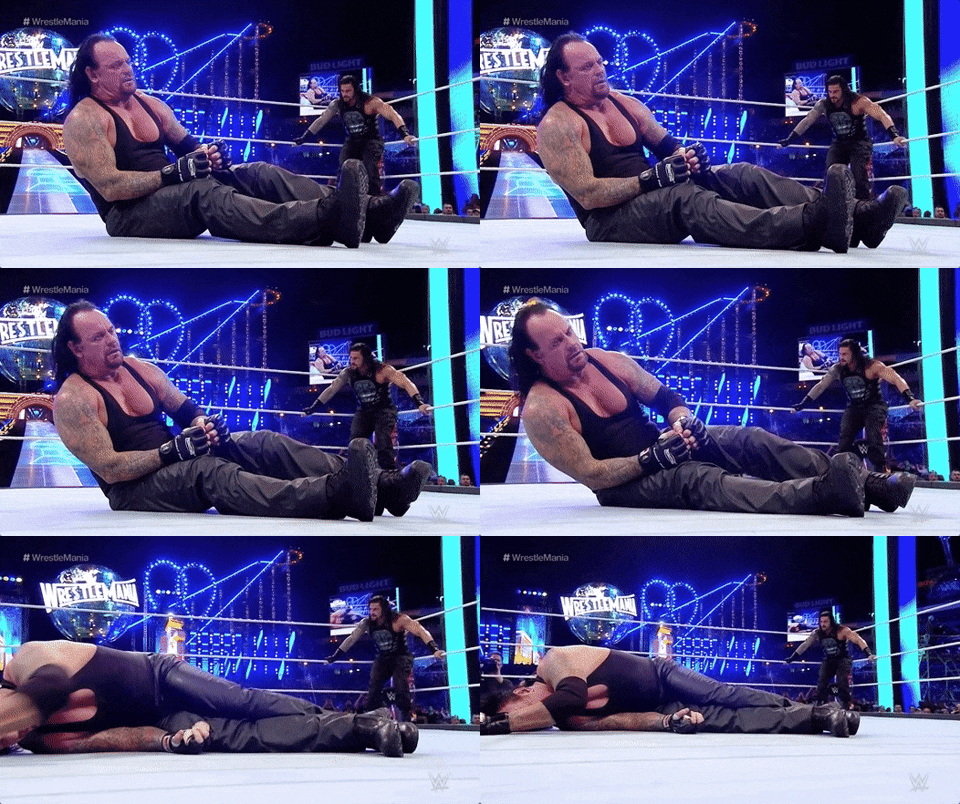
The two did battle for 20 plus minutes, destroying enough of the scenery that The Incredible Hulk would be impressed. Taker put up a valiant fight and he attempted to do his trademark sit up, inspired by Halloween movie slasher Michael Myers. He had done it many times before as a defiant show of will to his various opponents over the years wordlessly communicating that he just took their best shot and it barely registered. Exhausted, battered and physically wrecked, Taker sat up and then sadly slumped over as he collapsed back to the canvas.
One final Spear from Reigns (a running football tackle with a little extra mustard) and it was all over. A count of three and a bell. Another story told, another torch passed.
That’s when the tears began to form…
What makes Wrestling fascinating is it’s as much about the interaction between performers and audience as it is the performers interacting with each other. With a hot crowd, every emotion is amplified. As much as a raucous, lively crowd can make moments of triumph and euphoria absolutely stratospheric, a stunned, silent crowd can make moments of sadness and loss all the more bleak and eerie. A bit like being in a quiet hallway, where your footsteps and heartbeat feel like thunder, amplified in contrast to the serene stillness around you. The reality was slowly sinking in that this was it. A legend had fallen and was now simply a mortal man.
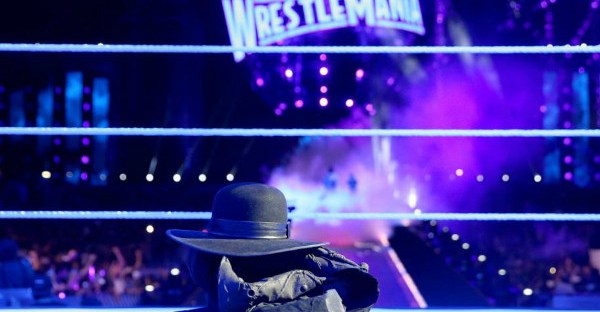
As the audience began to cautiously applaud, chants of ‘Thank you Taker” started ringing out – breaking the silence. The Undertaker then did something he was rarely known to do before. He broke character. He hugged his family at ringside. He removed his coat, gloves and hat and piled them in the ring. Then he walked back up the entrance ramp pausing only to take a rueful last look back before walking off.

Undertaker’s entrance had always been a theatrical and spine tingling experience. The ominous bell heralding his arrival, the arena filling, with an eerie mist, and the soaring orchestral funeral dirge of his theme song were always crowd pleasers. On this night, however, it was his exit that stood out. The symbolism was obvious: The Dead Man (one of his other nicknames) was done. A day many of us saw coming, but were still not prepared for when it happened.
Then the levees broke and the tears came. Whatever emotional dam had been holding back opened up for me in one ugly snotty cry session. Seriously, there was so much snot. I broke down weeping about the retirement of a fictional character played by a man I had never met. I know it seems very strange, but I’ve had time to think about it and it kind of made perfect sense.
While most of my family either politely tolerated my love of pro wrestling growing up (or outright disdained it), my father used it as a way to connect with me. We were different in so many ways – he was an electrician by trade and I was an artsy creative type without any mechanical inclination. Yet for our differences, we had this one thing to connect us. Growing up, my Dad hated Hulk Hogan. He thought the absurdly orange surfer dude with the tragic hairline and the walrus mustache was nothing but a preening pretender to the throne of the one true attraction in wrestling. He would talk about his memories of seeing Andre the Giant in person while going to wrestling shows in his youth. He would tell me about how transfixed everyone was on the “Eighth Wonder of the World”.
While my old man and I disagreed on Hogan (I’m decidedly not a fan now so we would probably be on the same page if I could ask him today), the one thing we agreed on was The Undertaker was the coolest fucking guy ever. His character was – in retrospect – just the perfect mix to have that cross generational appeal. With his iconic hat and duster, Taker had enough old school Clint Eastwood swagger to appeal to the older generation but was still a larger than life gimmick to appeal to a 90’s kid in the Hulkamania era.
When The Undertaker left his gear in a sad little pile in the ring on April 2nd, 2017 (I later realized six months to the day after Dad died) it felt like one of my last special connections to my father was gone. And I was ok with that because it wouldn’t have felt the same now that Dad was gone. It seemed a fitting end. My silly little hobby watching heroes and villains do simulated battle in a ring had helped set me on a path to closure and getting on with the business of living. Healing comes from the strangest places sometimes.
One of the things I’ve learned about grief since then is that it is intensely personal for each person who experiences it. No two relationships are exactly alike. Just like no two personalities are alike. Part of grieving is coming to terms with not only the loss, but adjusting to the new reality of living in a world without that which has been lost. Sometimes, when you think you’ve gotten past it, something small will come along and break the dam.
In my case, part of coming to terms with that reality was in looking for symbolism to put some sort of sense to it. To mold the concept of closure and acceptance into a finite structure. To pin that idea to a tangible thing that I could deal with as a proxy. It was my way of processing things. The dates of these two things happening six months apart held zero significance to anyone aside from me, in that moment of realization. The idea that a character based around the personification of death would be both the thing that brought my father and I closer and then later would set me on the path to moving on without him didn’t mean anything to anyone but me. The idea that my last moment with my Dad would be with holding him in an urn in my hands (an object that held a very strong significance to the character of The Undertaker) didn’t actually have significance except to me as a way to process a loss.
For all of the bombast, drama and theatrics involved in the match preceding, it was the quiet little image pictured above that has stuck with me ever since. The shot of Takers gear left behind in the ring hit a raw nerve and burrowed deep into my psyche for reasons that took me a long time to unpack. I think it took me back to a moment when cleaning out Dad’s house while trying to piece together his final moments based on the context clues and observing the strange tableau left behind when activity suddenly stops. I remember seeing his reading glasses, on his bedside table and being absolutely destroyed by it. Like being hit with an unexpected punch in the stomach. They were just laying there right where he left them when he had taken them off to lay down for a sleep that he would never wake up from. They were objects that were now at rest because their owner had left them behind, just like the hat and coat piled lifelessly in the ring.
Of course wrestling fans reading this will know the punchline to this tale. The Undertaker didn’t retire that day. He came back a few more times since. In wrestling, as long as the body and the spirit are willing, there will always be another story to tell, one more match to have and one more “trip to the pay window” in the words of “The American Dream” Dusty Rhodes. While it bothered me for a while to see a perfect ending undone, ultimately I can’t un-experience that emotional catharsis this moment gave me no matter what happened later. I lived in that emotional space that this wonderful oddity that is pro wrestling creates and invites us to experience together. I believed it was over. That belief wasn’t fake or insincere and in an entertainment medium built on blurring the lines of reality and the suspension of disbelief, giving myself over to that belief had a real tangible effect on my life. That’s the power of art. It reaches us in ways that we can’t always make sense of in the moment. I experienced that process of grieving a loss alongside 70,000+ people in that arena and millions watching at home, while privately by own loss by proxy and coming to a place of acceptance.
And so draws a close to the tale of The Dead Man and the Undertaker. The story of how saying goodbye to a man I’ve never met, helped me to process the loss of the man I felt I was just getting to know.
Rest in Peace Dad
Author’s Notes – July 10, 2019: I had been sitting on this piece for a few months. Mostly due to me still tinkering with the website and figuring out how wordpress works in my spare time. Having re-read it after putting it away for a bit, it seemed like it was finally in a state to be shared more widely.

 RogueType.com