
There is a funny scene in Family Guy where the Griffin family are trapped in a car that it slowly filling up with water and Peter Griffin uses that moment to confess that he didn’t like The Godfather. As the car continues filling, the rest of the family spend their fleeting moments chastising him and telling him how great it is.
I feel my equivalent is when I tell people I didn’t really like The Beatles. People tended to look at you like you just told them you’re not really a fan of breathing air or gravity. The Beatles were so thoroughly engraved into the marrow of pop culture, that their greatness was just an accepted fact.
Yet, for most of my life they were just kind of a thing that happened, that I was aware of, but otherwise didn’t give much thought to.
I was born in the mid 80’s, so The Beatles have always been an artifact of history to me. The band had been broken up for over a decade and the senseless murder of John Lennon in 1980 put any notions of a new generation revival like the The Rolling Stones, AC/DC and Aerosmith all enjoyed well into the 90’s and 2000’s completely off the table.
Beatlemania was this colossal, multi-media, world changing phenomenon that I only really experienced through what limited retrospectives existed at the time or heavily mythologized second hand accounts from those who lived it in the intervening years (where the copious drug use and nostalgia goggles of said group make them unreliable narrators at best). News reels, biographers, interviews and the Fab Four’s foray into film with 1964’s comic mockumentary A Hard Day’s Night can help paint the picture, but so much of who these people were is largely left in the realm of pop culture idolatry.
In a move that would form the template for pop music groups to this day, each of the Beatles became reduced down to an archetypal label. A short, simple description of which “type” they were. Paul was the cute one, John was the smart one, George was the quiet one and Ringo the funny one.
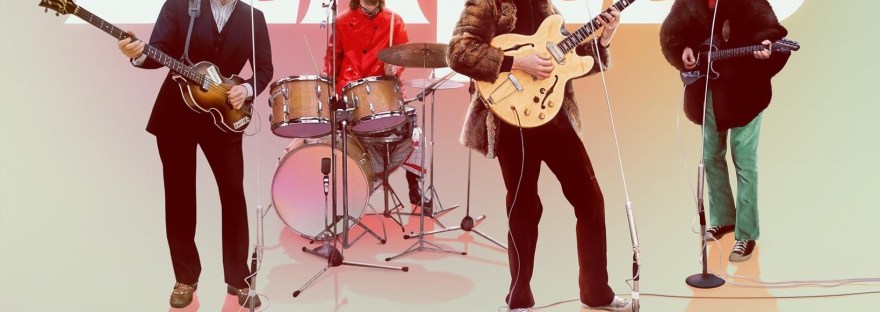
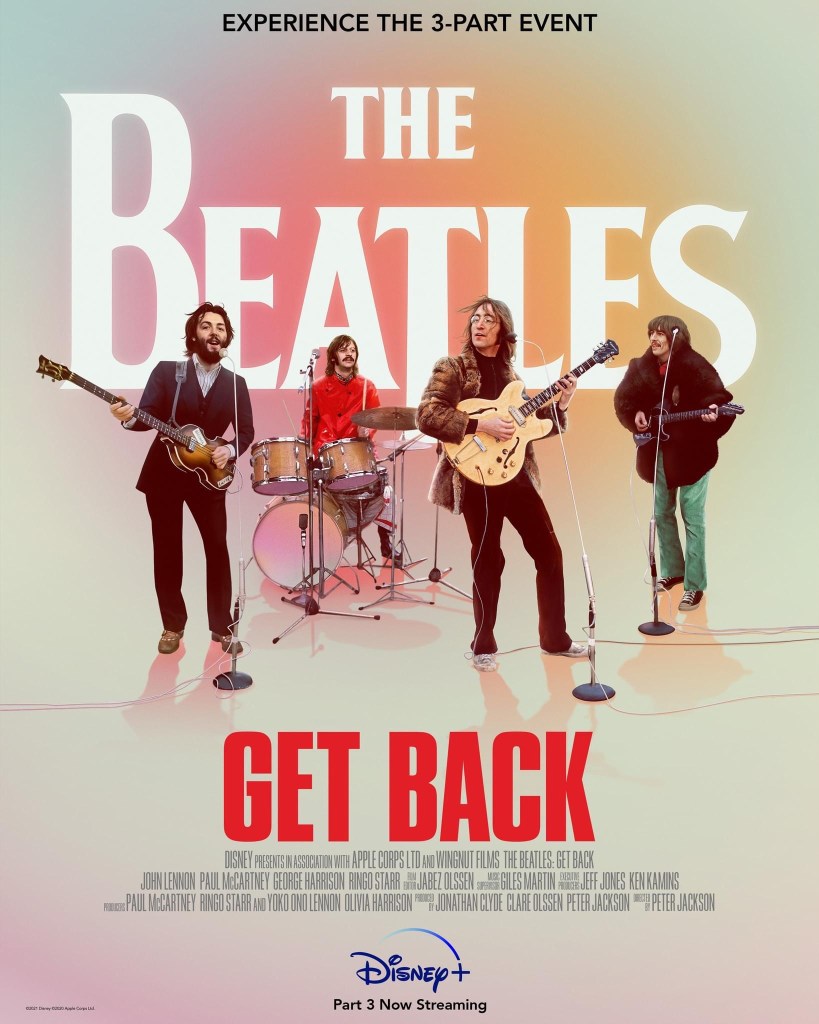
One of the great accomplishments that Peter Jackson’s documentary The Beatles: Get Back manages is illustrating that those labels were far from the sole descriptors of four very unique people who had a friendship and partnership much more complex than the oversimplified history would suggest.
It’s safe to say that within popular culture history, The Beatles truly breathe rarified air. There have been stars along the way that have burned brighter or longer but very few have cast such a long shadow as The Fab Four.
John Paul, George and Ringo became ubiquitous in the pop culture world. It’s hard to fathom in today’s segmented entertainment landscape, that anything would ever reach the saturation and white hot intensity of Beatlemania.
Even so, for someone of my generation, who grew up with The Beatles being this legendary thing of a distant past I wasn’t around for, I have to acknowledge that I didn’t really get it. I’m sure part of this was due to youthful defiance and rejection of “old stuff”. Being the contrarian to things your parents like is kind of a teenage past time in and of itself.
(Sidenote: I also grew up listening almost exclusively to country music, and by the time I migrated over to rock in my teens, I was looking for something more rebellious than the clean cut Beatles offered.)
They were just something of a blind spot for me. They were songs on oldies radio I only later realized were from their catalog. The Beatles had long become the familiar staples absorbed into the cultural fabric that I would hear playing over the PA system in the grocery store and at the swimming pool. Growing up, my enduring memory of them was my first grade music teacher, performing with his midlife crisis rock band, playing “Eight Days A Week” to a crowd of bored six year olds. Not exactly electrifying.
As I grew older, hit my mid 20s and iTunes (…and Limewire) put the world of music at my fingertips, I finally started going through their discography. Spoiler alert, but it turns out The Beatles were pretty good, I just had the unfortunate experience of getting the karaoke off brand version first.
I was also more of a Rolling Stones guy…
I gained more of an appreciation for their legacy and their musical talents in my older years, but that was a much different experience. When you get into new music (new to you at least) as an adult, you don’t have the euphoric dopamine rushes of a developing brain making everything the GREATEST THING EVER. You see the cracks in the foundations, and you notice the flaws that the exuberance of a teenaged brain would otherwise plaster over. It was that was the mindset I came to The Beatles with. The boring, adult mindset where everything is some shade of “y’know…pretty good…I guess”.
Hopefully all of this preamble puts a bit of context to the state in which I came to this documentary miniseries. I put on Peter Jackson’s documentary Get Back, not really knowing what to expect, and found myself thoroughly engrossed. I came to it not with the perspective of a Beatles superfan, nor a hardcore audiophile. I vibed with this documentary because I have an interest in the intersection of history, pop culture, character profiles and human interest and it absolutely delivers in that regard.
So I thought I would write a bit about it because there’s a lot to dig into.
Get Back-ground
As the initial text crawl explains, the footage captured for Get Back originally began life as an intended TV special documentary, meant to culminate with The Beatles first live performance in two years where they would record their next album live. The whole project was the idea of Paul McCartney, however the conditions the band find themselves in were partly to address the growing disconnection they were experiencing.
The Beatles previous records had become increasingly intricate and experimental. Use of various new (at the time) recording technologies such as multi track recording and overdubbing had taken Beatle records far away from their R&B, blues and folk roots. Their work became more high concept and psychedelia influenced, the productions grew bloated, leading to a feeling that they had lost their way. The ability to record different parts of the songs separately also had the effect of keeping an ever contentious and volatile group at a distance from each other.
The Get Back sessions were conceptualized to try to kill two birds with a single stone. It was an attempt (a mostly successful one at that) to doing a back to basics Beatles record with a one take production style, as well as an attempt to try to get everyone back together in one room.
The TV special didn’t end up happening, however the footage captured in the session was later used to form the basis of a theatrical documentary Let It Be directed by Michael Lindsey-Hogg.
The footage is an absolute treasure trove, creating a vivid time capsule of so many granular moments that would likely otherwise be lost to history. Revealing unguarded moments of candor exist equally alongside self-aware, winking acknowledgements breaking the fourth wall and both provide interesting windows into the participants. Not only does the docuseries capture the personal dynamics of the band, but also glimpses of a changing cultural backdrop that was right around the corner in the 1970’s.
The “Get Back sessions” which took place beginning in January of 1969, were where the band would create material for what would be their final two albums Abbey Road and Let It Be (the latter would be released after the band’s break up in 1970).
The Get Back sessions depict a marriage very much on the rocks, managing to hold it together for one last attempt at reconciliation before the collapse everyone knows is coming. Perhaps the most intriguing thing about Get Back is how cordial the hostility has become. The White Album, recorded over a span of six conflict filled months in 1968 was in many ways the real blowing up of The Beatles. That was the ugly turning point that we didn’t see. If it weren’t for the fact that The White Album was a huge critical and commercial hit and considered some of the group’s best work, that probably would have been the end.
(Note: Of course, it also can’t be overlooked that the subjects knew they were being recorded for this documentary, which may have contributed to the people depicted being on their best behavior.)
The story of Get Back is a tragi-comic mix of lingering, often unspoken tension but also moments of pure joy and triumph amid all of that. Within the personal and working relationships between The Beatles (particularly the frenemy dynamic between John and Paul), when it works, it really works. Seeing the group getting into their groove and firing on all cylinders musically goes a long way to illustrating why the people involved tried so hard to keep everything together, long after most would have walked away. As a viewer, I could feel that indefinable magic coming through and I GOT IT. All of the Beatlemania stuff that had been purely theoretical to me as a kid suddenly made sense. This group wasn’t just hype. They had a special chemistry and the moments in the doc when the dark clouds part and the sunlight shines through are euphoric.
This documentary manages to dispel a lot of myths regarding The Beatles and their break up. Get Back returns some of the humanity to these four individuals who had been elevated to one dimensional pop culture icons, and it makes the previously straight forward explanation of “John and Paul couldn’t get along” much more complicated. Interactions during the moments depicted are civil, even the ones where there is disagreement. There aren’t any shouting matches or fist fights here. The participants are all entering middle age, and their interactions are surprisingly mature.
When you strip away the Beatles of it all, Get Back is a story of a what happens when people grow apart. Moments where we see the boys cutting up and trying to make each other laugh, playing impromptu jam sessions, and generally having fun goofing off always seem to have a layer of bittersweet tragedy lurking just under the levity. They remind us that behind the show business, this was a real friendship that is now strained in ways that would never be fully repaired. In some ways, the documentary would be easier to digest if they just all hated each other, but the actual picture isn’t that simple. You can see why these four people became friends, because that comradery is still there. The problem is it’s hidden under a decade of success, diverging interests, philosophical differences, family and life obligations, creative conflicts and long simmering personal issues. We’ve all had people we’ve grown apart from in life, but very few of us had those relationships be subject to such public scrutiny and historical/financial importance.
On a film craft level, this is about as pure a fly on the wall doc as it gets. An intimate experience putting us in the thick of things while capturing the mundane reality of historically important events the participants don’t yet know are significant. Moments where Jackson supplements the footage (e.g. – with contextual information, montages or adding photos over audio recordings) are sparse for much of the eight hour runtime. For the most part, we are left to observe the proceedings and the personalities involved in all of their messy, chaotic, hilarious, frustrating, triumphant and sad moments.
Eight Hours
The series runs approximately eight hours, divided into three parts varying between two to three hours in length. Originally, the sections of the doc were to be released into theaters to coincide with The Beatles 50th Anniversary, but Covid put that on hold and the project was re-tooled as a streaming exclusive. I have to say that releasing them to a streaming platform like Disney+ was absolutely a happy accident that makes a much more pleasant viewing experience.
I cannot imagine a theatrical version of this. At least not in this form. I’ve already established that I wouldn’t be the guy lining up at the box office to buy tickets to begin with but trying to imagine sitting in a theater for this feels like it would be an endurance test, even for a die hard Beatles fan. I imagine the scene in Man On The Moon (based on a real thing that used to happen) where Andy Kaufmann comes out on stage for a college performance and proceeds to read The Great Gatsby. To completion. All of it. At first the audience enjoys the joke, but once it becomes clear that this is the show, they start to leave and eventually one guy is all that is left. That’s what I feel like watching this in a theater would be like.
So much of what works about this series involves just sitting in the middle of these people and watching them just be as a silent observer. George Harrison recounting the plot of a sci-fi tv program he’d watched the night before works in the streaming cut because it’s a nice little moment of demonstrating George’s character as a shy, thoughtful person but I can’t say it’s particularly necessary and I have a hard time imagining that scene making it into a studio cut. It would feel out of place in a theatrical cut, yet it feels perfectly at home in a leisurely paced streaming documentary where you have the ability to stop watching and pick up later or pause for a break. This is a documentary that is tailor made for the intimacy of home viewing because it’s not about the plot, it’s about the hangout.
Now is as good a time as any to say plainly, this series isn’t going to work for everybody. It’s languid pace will actively alienate and frustrate viewers looking for a more streamlined or plot heavy experience. This is not a documentary that is concerned with brevity (no wonder I liked it). It doesn’t move along at a satisfying pace. It has long stretches that will test a viewers patience. Long conversations that seemingly go in circles, rehearsal sections that never play an actual song to completion. If you’re coming into this doc amped up for some Beatles tunes, this series will have you blue balled until about the last 40 minutes because everything up until then is basically start and stop.
As a person who likes hearing about creative processes, I think the format works. The three film structure provides a nice three act dividing line to differentiate the stages of the journey.
It is one of the areas that Peter Jackson, instincts as a filmmaker and storyteller come to the surface. The structure of the series does provide a cathartic narrative journey, anchored around the song the series takes a name from.
The title song plays a key role in emotional moments of all three episodes. In Part one we see Paul’s initial creation of the song, in a great scene where he goes from idly strumming away on his bass, to having the hook and the chorus already figured out in under two minutes. The studio recording of the single version in a high point of Part Two, complete with a celebratory montage of fun studio moments. Finally, the song opens and closes the final Beatles live performance on the rooftop of Apple Studios.
If I had to distill the narrative arc of this series into a simple sentence, Get Back is about the journey of the last big hit The Beatles would have while the band was still together.
(Sidenote: Let It Be was released after the band broke up, and Abbey Road was released just a few days after John Lennon privately left the band, hence why Get Back was the last big single while the band was active, as the final two albums were basically post breakup releases.)
The depiction of the struggle of the creation of art is where the runtime works in favour of Get Back. As a more streamlined film (or films plural), I don’t think we would get the same catharsis from the creative breakthroughs if we didn’t spend those frustrating stretches of time in the middle of things watching John and Paul mulling over what character names to use in the song, humming a tune trying to figure out and arrangement, tinkering with this lyric or that chord choice and starting to play the song dozens of times but not making it through to the end.
If nothing else, this series depicts the often Sisyphean struggle of trying to create art. This is a good demonstration of how the sausage is made and the start and stop nature of the creative process, which is a big part of why I found it interesting. Without the moments of frustration, boredom and just idle farting around, the moments of success where things finally come together wouldn’t mean nearly as much.
Final Thoughts
Get Back could have been a cheap cash in. A novelty nostalgia trip, buried under rose tinted glasses. Instead it exists as a fascinating time capsule of a period for the band that wasn’t the happiest of times, but also not as bad as the mythologizing would have one believe. It provides a glimpse into the personalities and complex dynamics behind one of the most legendary rock acts of all time. It returns these mythic figures back to their humanity by refusing to sanitize or sensationalize the conflicts. Peter Jackson’s unobtrusive direction lets the personalities involved speak for themselves without need for heavy handed narration or other storytelling flourishes. We are allowed to experience the mix of comedy and tragedy that comes with a long term relationship slowly breaking down, by taking a seat right in the middle of it all.
The Beatles would return to studio once more after this for the Abbey Road sessions, which were infamous for Paul nearly breaking George and Ringo by making them play Maxwell’s Silver Hammer so many times. (I mean…fair point.)
John Lennon – recovering from a car accident at the time – refused to participate in the peppy song about a serial killer wielding the titular silver hammer, calling the song “more of Paul’s granny shit”.
So I guess that makes it two Beatles that were murdered because holy shit John….
By all accounts, the working relationship that managed to hold together just barely during the Get Back sessions finally cratered at Abbey Road and that was that. Like the Bluesmobile falling apart the second it reaches the county clerks office, The Beatles managed to hold it together just long enough to finish their final work (including more than a few iconic songs we would have otherwise lost). While Get Back ends on a rousing and triumphant note with the rooftop concert, real life doesn’t have neat story arcs or happily ever afters. So I guess the ultimate takeaway is to appreciate the victories along the way.
The year of 1969 stands as one of the most stark cultural turning points in living memory. Very infrequently does the numerical end of one decade come with such a sudden cultural shift. Usually there’s a bit of overlap as the calendar ticks over but 1969 is a hard stop on a lot of things. It was the year that the Manson Family murders as well as the Rolling Stones concert tragedy at Altamont heralded the end of the innocence and good times of the hippy counter culture movement. The Kent State shootings and Watergate were right around the corner to put the final nail in the coffin of the post WWII optimism of the 40’s through 60’s.
This documentary is of course, much less extreme as compared to the examples listed above, but Get Back feels similarly like the end of an era that the participants aren’t aware of yet. In some ways, it was appropriate that the band known for peace and love anthems like “All You Need Is Love” wouldn’t survive past the 1960’s as things were about to get much more complicated. It serves as a kind of historical snapshot that we take for granted with the means we have today of documenting history.
We now live in an age where chronicling the creation of art is common. Where cameras are ubiquitous on our phones and most events are captured from multiple viewpoints. A large part of my interest in film came from watching DVD documentaries about the making of films, listening to director commentaries talking about the thought process behind the choices made. I like knowing how the sausage is made in art because art is ultimately a human means of expression where the process is often as interesting as the product. Part of what made Get Back a fascinating watch for me is how rare this kind of production, documenting the real time creation of a historically important moment was at that time, with the technology available. This is quite possibly the furthest back this kind of thorough, high quality, video documentation of a historically important event has gone, largely because it took the clout of a group like The Beatles to justify the expense and time involved.
I think the major dividing line when it comes to Get Back will be whether you are a process person or a product person, when it comes to the art you enjoy. Most of us are somewhere along that spectrum, with I’m sure a smaller crew on the very ends who exclusively care about one but not the other. If you’re too far toward the product side, you probably won’t gel with it. If you’re a person who just likes hearing the final songs, you’ll probably want to skip to the last forty minutes because the rest will probably drive you nuts.
That said, if you are a person more towards the process side of things, this might just be in your wheelhouse. Yes, it’s long and in places a bit meandering, but I think the experience of hanging out with these people in the midst of a crucially important moment in their lives provides a fascinating almost time travel experience.
Overall, I came away from this series with a greater appreciation for The Beatles as musicians than I went in with and that likely has to do with Get Back providing an avenue of access for a more process oriented person like me. I’ve always felt compelled to learn more about the the nuts and bolts that go into the art: reading the liner notes of an album, watching behind the scenes documentaries, reading up on the historical context and learning the personal stories of what didn’t make the final product. All of that kind of stuff goes a long way to help me connect with art. The Beatles: Get Back is such a richly detailed resource to mine and there are so many little moments to unpack that I could write a whole piece just digging into the little details.
So, maybe keep an eye out for that down the line.
That’s all for this time. As always thank you for reading. You can follow me on twitter @TheRogueTypist if you are so inclined.

 RogueType.com